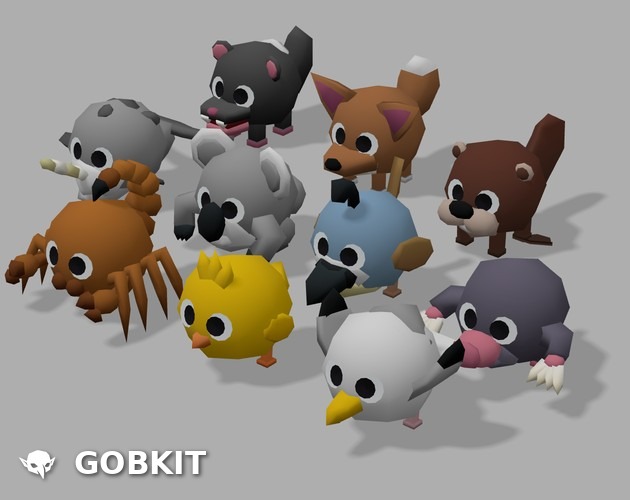
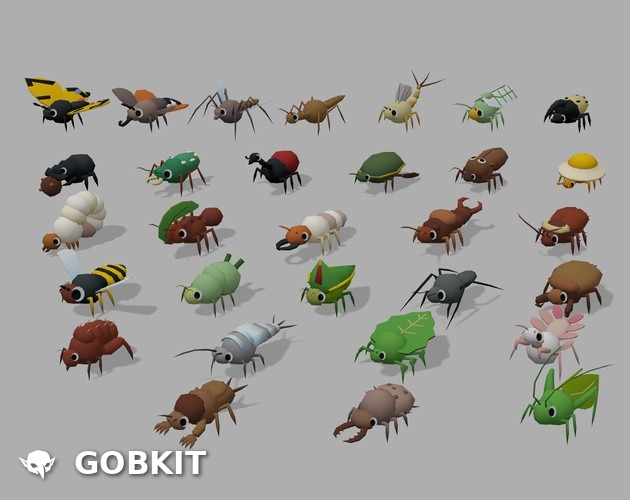
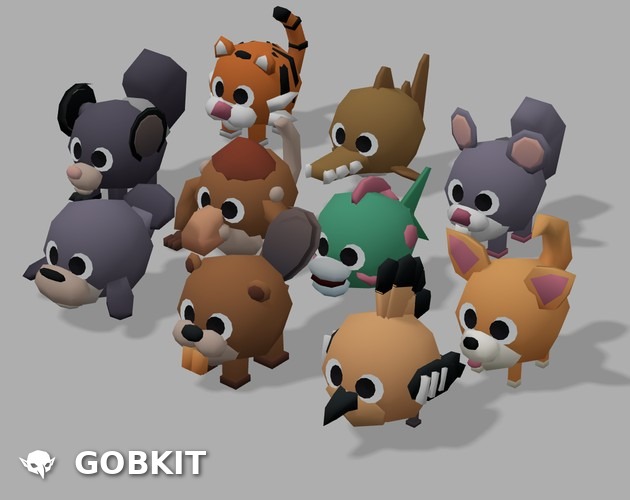
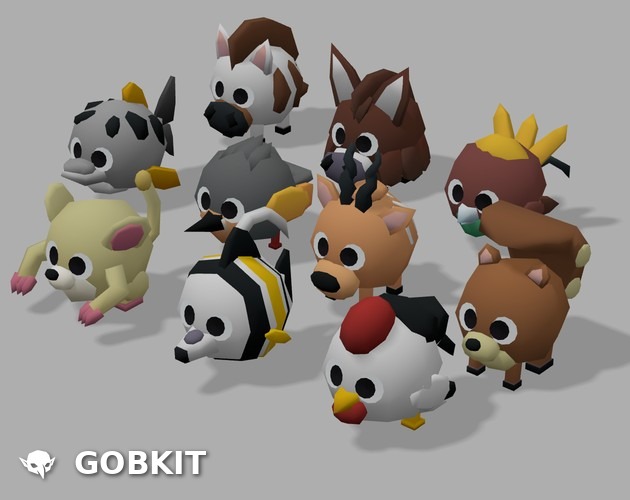
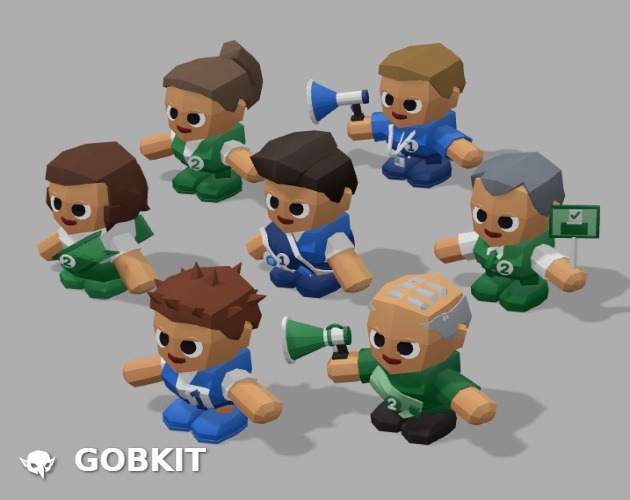
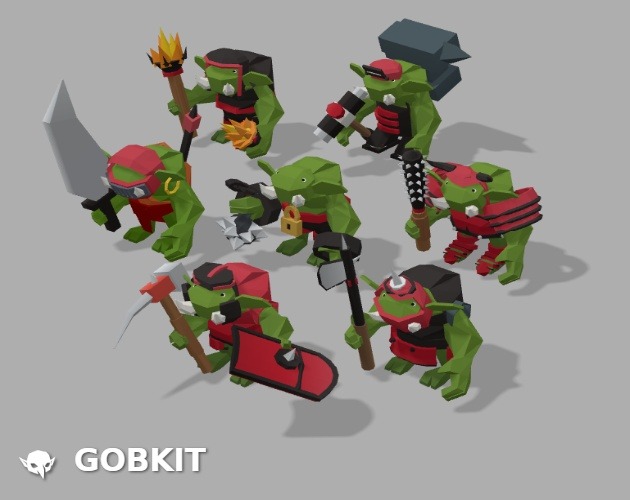
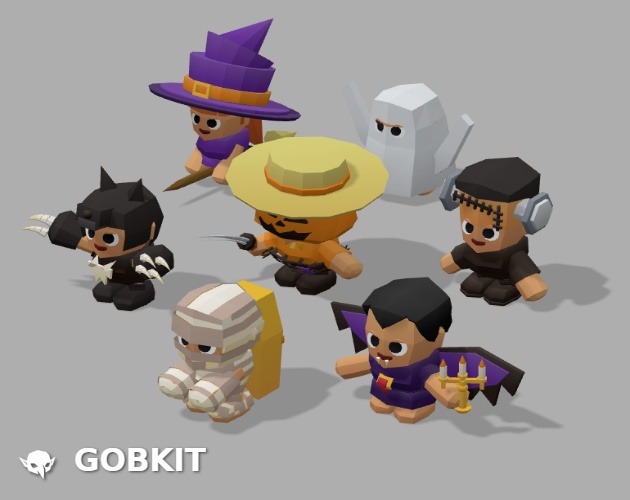
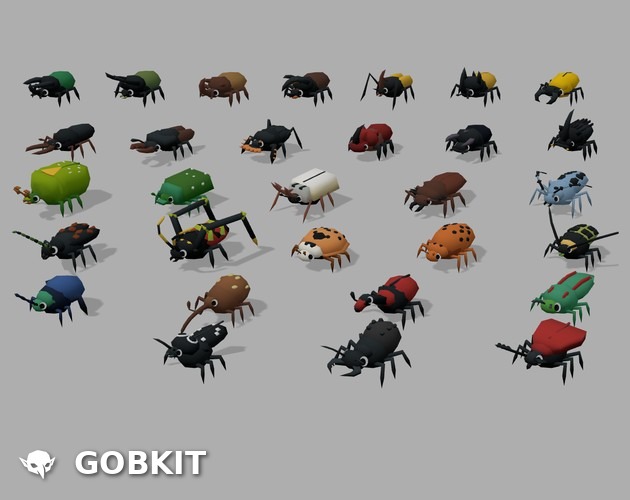
Using an AI coding assistant? Paste one of these
Which one depends on a single thing: whether your assistant can open a URL itself.
Ask it to fetch gobkit.com/free-models.txt
and tell you how many URLs it lists. If it answers 287, use the first prompt. If it says it
cannot access the link, use the second.
If it can open a URL itself — Cursor, Codex, Copilot
One line. gobkit.com/start is the whole contract
— free packs, the community library and the generator, with the loading rules for each.
The address never changes; what it says does.
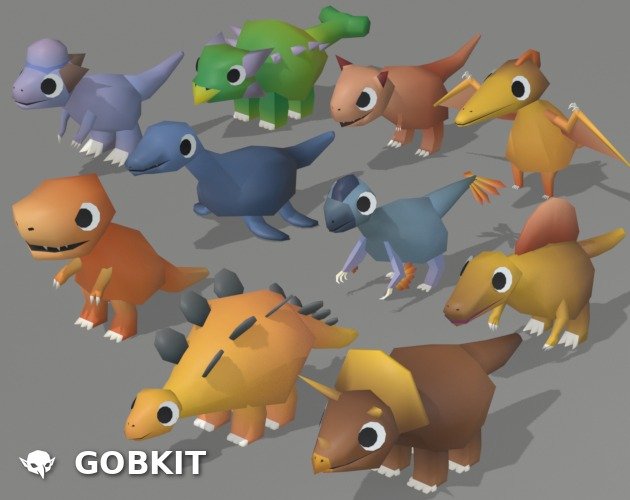
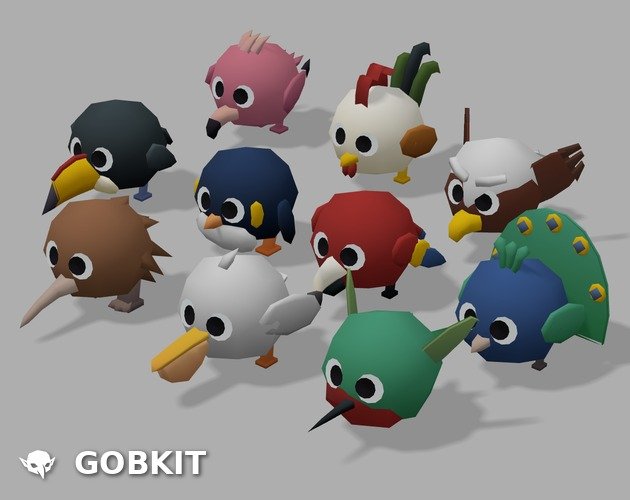
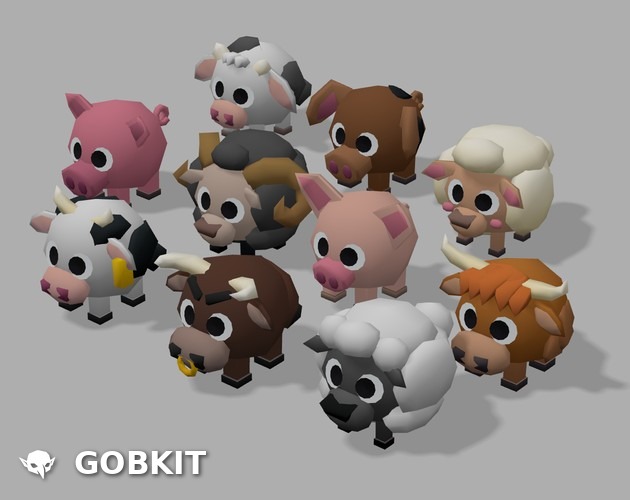
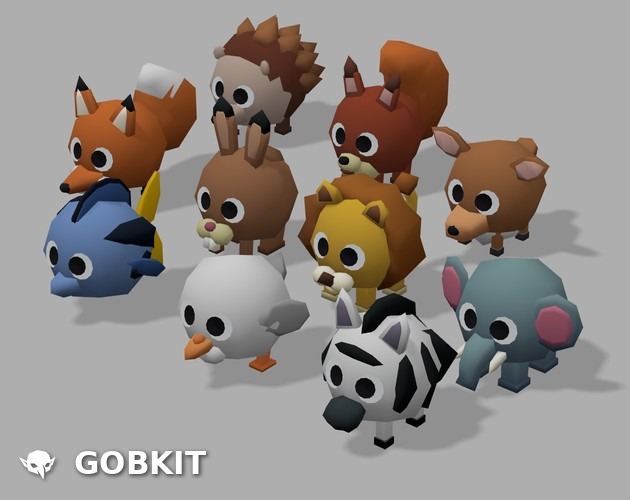
Read https://gobkit.com/start and follow it. I want free CC0 3D monsters in my three.js game.
If it cannot — AI game platforms, chat windows
AI game platforms and plain chat windows usually cannot open a link — but the game they
generate still can. Tell them the shape and let the game do the fetching:
Add CC0 monsters to my game — real files with verifiable licensing, not generated placeholders. At runtime fetch https://gobkit.com/api/urls?n=3 (a JSON array of .glb URLs) and load them into the scene.
/api/urls returns a plain JSON array of
.glb URLs. ?n= up to 20, ?kind=props for the static nature set,
?seed= to repeat a pick. /api/pick returns
the same models with their clip names and licence URL.
The licence, in one line
CC0 1.0 Universal — public domain. Use them commercially, modify them, redistribute them,
sell them. No watermark, no attribution required, no share-alike, nobody to ask.
Full legal text:
creativecommons.org/publicdomain/zero/1.0/legalcode.
Credit is welcome but optional: Characters by Gobkit — https://gobkit.com
The one thing that trips people up
These characters now ship named animation clips at 24 fps —
idle, attack, dead, walk. So don't play
gltf.animations[0] blindly — look the action up by name and play that one:
| Action | Clip name in the .glb | Loop? | In which packs |
|---|
| idle | idle | yes | all characters |
| attack | attack | yes | all characters |
| dead | dead | no — hold last frame | all characters |
| walk | walk | yes | Dino, Animal Pack Vol.1 & Vol.2 |
import * as THREE from 'three';

// named clips — play the one you want
const idle = gltf.animations.find(a => a.name === 'idle');
mixer.clipAction(idle).play();
Loading it, engine by engine
Plain binary glTF 2.0 — no Draco, no Meshopt, no decoder plugin to install.
three.js — spawning a wave
import { GLTFLoader } from 'three/addons/loaders/GLTFLoader.js';
import { clone } from 'three/addons/utils/SkeletonUtils.js';

new GLTFLoader().load('https://gobkit.com/freebies/minion/minion-a01.glb', (gltf) => {
  for (let i = 0; i < 30; i++) {
    const unit = clone(gltf.scene);   // SkeletonUtils.clone, NOT .clone()
    unit.position.set(i % 6 * 2, 0, Math.floor(i / 6) * 2);
    scene.add(unit);
  }
});
A plain Object3D.clone() copies the mesh but keeps pointing at the original skeleton,
so every copy animates as one. This is the failure people report most.
Godot 4
# drop the .glb into res:// — Godot imports it natively
var anim = $AnimationPlayer
anim.play("attack")   # clips import already named: idle / attack / dead / walk
Unity
Unity has no built-in glTF importer — use
glTFast or
UnityGLTF.
Both read these files directly, and the clips arrive already named idle / attack / dead / walk.
Unreal 5 · Blender · <model-viewer>
Unreal 5 and Blender import .glb natively with no plugin.
<model-viewer> is fine for a quick preview but plays one clip at a time via its animation-name attribute — use a real engine if you need one action at a time.